I remember sitting in my home office on a Tuesday morning in mid-June 2025, scrolling through defense news while drinking coffee that had gone slightly cold. That is when the Pentagon statement dropped, and honestly, it made me pause mid-scroll. The news was straightforward but packed with implications: President Donald Trump had ordered Greenland transferred from US European Command to US Northern Command.
This was not some minor bureaucratic shuffle that only military insiders would care about. This was a significant reshuffling of how America views its Arctic defense posture, and it came at a time when global tensions were already running hot with conflicts in the Middle East and ongoing concerns about Russian and Chinese expansion in the polar regions. The Pentagon’s chief spokesman, Sean Parnell, put it clearly in the official release: “The President recently ordered a change to the Unified Command Plan. This change shifts Greenland from the US European Command area of responsibility to the US Northern Command area of responsibility.”
What struck me immediately was the timing and the context. For months, Trump had been making increasingly bold statements about Greenland, going so far as to suggest the United States should acquire the territory, and he had notably refused to rule out using military force to do so. Just weeks before this command shift, Vice President JD Vance had visited Greenland and received what diplomats would call a “chilly reception” from locals. The Danish foreign minister publicly stated, “This is not how you speak to your close allies,” which said it all about how strained things had become.
So when this command change was announced, I knew it was about far more than just lines on an organizational chart. This was about sending a message, redefining strategic priorities, and potentially reshaping the entire Arctic security landscape. Let me walk you through what this actually means, why it matters, and what might come next.
Understanding the Command Shift: From EUCOM to NORTHCOM
To really grasp why this matters, you need to understand how the US military organizes itself globally. The Department of Defense operates under the Unified Command Plan, which divides the world into specific areas of responsibility overseen by different combatant commands. Think of it like a massive organizational chart where each commander has authority over US military operations in their assigned geographic region.
For decades, Greenland fell under the US European Command (EUCOM), which makes sense historically because Greenland is an autonomous territory within the Kingdom of Denmark. Denmark is a founding NATO member, and the logic was that Greenland’s defense should be coordinated alongside other European NATO operations. The commander of EUCOM, typically a four-star general, would oversee military activities, planning, and resource allocation for the island alongside operations in Europe.
With this shift, Greenland now falls under the US Northern Command (NORTHCOM). This is the command responsible for defending the US homeland and overseeing operations in the continental United States and Alaska, and it works closely with Canada through NORAD. The significance here is that Greenland is now being treated not as a European outpost but as part of the American homeland defense architecture.
According to the Pentagon’s official statement, this change will “strengthen the Joint Force’s ability to defend the US homeland, contributing to a more robust defense of the western hemisphere and deepening relationships with Arctic allies and partners.” That language is telling. It frames Greenland as integral to homeland defense rather than as a forward operating base in Europe.
Iris Ferguson, who previously worked at the Pentagon focusing on Arctic issues, captured the essence of this shift perfectly when she wrote that “aligning Greenland with NORTHCOM will mean that it is treated not as an outpost, but as a cornerstone of US security posture in the High North.” That distinction between “outpost” and “cornerstone” really encapsulates the strategic rethinking happening here.
Why Greenland Matters More Than Ever: The Geography Factor
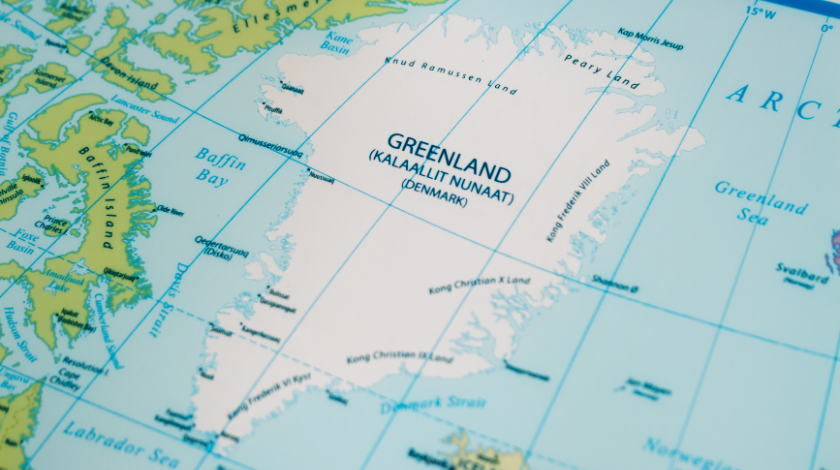
If you look at a globe rather than a flat map, Greenland’s importance becomes immediately obvious. It sits like a massive sentinel between North America and Europe, right in the middle of the shortest air routes between the United States and Russia. During the Cold War, this geography made Greenland crucial for nuclear deterrence strategy, and today it is becoming equally important for an entirely new set of reasons.
The Arctic is warming rapidly, and I mean rapidly in ways that are transforming global geopolitics. The ice that used to block shipping lanes for eleven months of the year is now melting enough to allow commercial traffic and military navigation for longer periods. Russia has been aggressively building up its Arctic military capabilities, reopening Soviet-era bases and deploying new icebreakers and submarines. China has declared itself a “near-Arctic state” and is investing heavily in polar research, infrastructure, and resource exploration.
Greenland itself sits on vast reserves of rare earth minerals, which are essential for modern electronics, electric vehicles, and military systems. Currently, China dominates the global rare earth market, and the idea of having an alternative source within its territory that America could potentially control is clearly appealing to strategic planners in Washington.
Then there is the GIUK Gap, which stands for Greenland-Iceland-United Kingdom. This is a maritime chokepoint that Russian submarines and surface vessels must pass through to access the North Atlantic. Monitoring this gap is crucial for NATO’s ability to track Russian naval movements and maintain open sea lanes. Pituffik Space Base, located on Greenland’s northwest coast, provides the perfect vantage point for this monitoring.
The base is also the world’s northernmost deep-water port, which matters enormously for logistics. When you are trying to supply military operations or scientific research in the High Arctic, having a port that can handle deep-draft vessels is incredibly valuable. Most of Greenland’s coastline is blocked by ice or shallow waters, but Pituffik offers genuine strategic depth.
From Thule to Pituffik: A Base with a Complex History
The story of the American military presence in Greenland dates back to World War II, and it is filled with fascinating and sometimes troubling episodes that most Americans have never heard of. When Nazi Germany occupied Denmark in 1940, the Danish ambassador in Washington, Henrik Kauffmann, acted on his own authority to sign a defense agreement allowing the United States to protect Greenland from German invasion. This was technically high treason against the Nazi-controlled Danish government, but it established the precedent for American military presence.
The 1951 Defense of Greenland Agreement, negotiated during NATO’s formation, granted the United States broad authority to build and operate military installations. What most people do not realize is that the US had already secretly decided to build a massive air base at Thule before the negotiations were complete. The project, codenamed Operation Blue Jay, involved an armada of 120 ships carrying 12,000 workers and 300,000 tons of cargo, which sailed from Norfolk, Virginia, in June 1951. The construction was comparable in scale to building the Panama Canal, and it was completed in just two years of continuous daylight work during Arctic summers.
The base became central to American nuclear strategy. During the 1950s and 1960s, Strategic Air Command operated from Thule, with nuclear-armed B-52 bombers flying continuous patrols over the Arctic. The 1968 Thule accident, where a B-52 crashed with four hydrogen bombs aboard, caused widespread radioactive contamination and ended the airborne alert program. Declassified documents later revealed that the US had kept nuclear weapons at Thule for years after promising Denmark the base would be nuclear-free.
In 2023, the base was renamed Pituffik Space Base, using the Greenlandic name for the region, and it was formally transferred to the new US Space Force. Today, it operates under Space Base Delta 1 and houses approximately 150 service members, a dramatic reduction from the 10,000 personnel stationed there during the Cold War peak.
The base’s current mission focuses on missile warning and space surveillance. The 12th Space Warning Squadron operates a Ballistic Missile Early Warning System radar that detects and tracks intercontinental ballistic missiles launched from Russia toward North America. The 22nd Space Operations Squadron operates a satellite control station that is part of the global network that manages military communications and surveillance satellites. These missions are absolutely critical for homeland defense, which explains why moving Greenland under NORTHCOM makes operational sense even if the political implications are complicated.
Trump’s Arctic Obsession: Reading Between the Lines
To fully understand this command shift, you have to look at the broader context of Trump’s statements about Greenland. Since returning to the office, he has repeatedly said that the United States “needs” Greenland for national security reasons. In March 2025, he told Congress, “One way or the other, we’re going to get it.” In an NBC interview in May, he elaborated: “We need Greenland very badly. Greenland has a very small population, which we’ll take care of and cherish, and all that. But we need that for international security.”
These comments have caused genuine alarm in Denmark and among NATO allies. When Vice President Vance visited in March 2025, he suggested Greenland could become independent from Denmark, which was widely interpreted as an attempt to drive a wedge between Greenland and its sovereign power. The visit was controversial enough that the base commander, Colonel Susannah Meyers, was later relieved of command for sending an email to personnel that appeared to distance the base from the Vice President’s political messaging.
What makes this command shift particularly notable is that it comes after Denmark’s parliament approved additional US military installations in Greenland, despite the tense diplomatic atmosphere. The Danes are clearly trying to offer cooperation on security while resisting Trump’s territorial ambitions, but the command change suggests the US is preparing to act more unilaterally regardless.
Defense Secretary Pete Hegseth, when pressed by Congress, refused to rule out that the Pentagon might be planning military action against Greenland. This is extraordinary language between NATO allies. The fact that this command shift happened anyway indicates that the administration is moving forward with its Arctic strategy regardless of diplomatic niceties.
From a purely military perspective, treating Greenland as part of homeland defense rather than European operations opens the possibility of expanded infrastructure. There is already a discussion of adding additional radar systems to the “Golden Dome” missile defense architecture. Being under NORTHCOM rather than EUCOM could streamline funding, decision-making, and operational coordination for such expansions.
The Diplomatic Fallout: Straining Old Alliances
Here is where I think this story gets particularly concerning for anyone who cares about international stability. Denmark is not some distant adversary; it is a founding member of NATO and has been a consistent American ally for over seventy years. The 1951 defense agreement that allows the Pituffik base to exist was built on mutual trust and shared Cold War fears. Watching that relationship deteriorate over Trump’s territorial ambitions is genuinely troubling.
European officials anticipated this command change for weeks before the official announcement, but their concern was less about the operational shift itself and more about how it would be presented. When the Pentagon framed it purely as a homeland defense enhancement without acknowledging the diplomatic sensitivities, it sent a clear signal that European perspectives were being sidelined.
The split is now explicit: Denmark and the Faroe Islands remain under European Command, while Greenland moves to Northern Command. This creates a symbolic and operational division between territories that have historically been managed together. For Danish policymakers, this must feel like watching a slow-motion erosion of their sovereignty over Greenland.
Greenland itself has a population of only about 56,000 people, most of whom are Inuit with their own distinct cultural and political identity. The island has home rule status and is moving toward greater autonomy. Some Greenlanders might see closer US ties as an opportunity to reduce dependence on Denmark, while others view American interest as neo-colonialism dressed up in security language. The local reception to Vice President Vance’s visit suggests significant skepticism about American intentions.
What worries me most is the precedent this sets. If the United States can unilaterally redefine its military command structure to undermine allied sovereignty, what stops other powers from doing the same? Russia already claims vast portions of the Arctic seabed based on questionable geological arguments. China’s “near-Arctic state” status is itself a stretch of geographic definitions. The international norms that have kept Arctic competition relatively peaceful are being tested.
The Military Reality: What Changes on the Ground
Let me be clear about something important: for the service members actually stationed at Pituffik Space Base, this command shift probably will not change daily life very much. The base will still operate under the 821st Space Base Group. The radar will still scan for missile launches. The satellite control station will still manage communications. The same Danish and Greenlandic liaison officers will still be present.
Where it does matter is in planning, budgeting, and strategic coordination. Under NORTHCOM, requests for infrastructure improvements or additional capabilities will flow through a different chain of command, one that is focused on homeland defense rather than European security. This could mean faster decision-making for Arctic-specific needs, but it could also mean less coordination with NATO allies who have their own Arctic interests.
The base’s physical location gives it unique advantages that no amount of organizational restructuring can change. At 750 miles north of the Arctic Circle and 947 miles from the North Pole, Pituffik offers visibility into polar orbits that lower-latitude stations cannot match. The BMEWS radar can track objects thousands of miles away, providing crucial early warning time for missile defense.
Climate change is actually making the base more accessible in some ways. While ice still blocks the sea for nine months of the year, the resupply window has gradually expanded. Operation Pacer Goose, the annual supply mission, can operate in conditions that were impossible decades ago. This increased accessibility could support expanded operations if the administration chooses to pursue them.
What remains to be seen is whether this command shift is the first step toward a larger military buildup or simply a bureaucratic adjustment to reflect geographic realities. The Pentagon has emphasized that the Unified Command Plan is reviewed regularly, and this change fits within that normal process. But the political context suggests there may be more changes coming.
Conclusion: An Arctic Future Defined by Competition
As I finish writing this, I keep thinking about how quickly the Arctic has transformed from a frozen backwater to a contested frontier. When I was younger, the Arctic was something you read about in adventure stories or scientific reports about climate change. Now it is a genuine theater of great power competition, with Russia building icebreakers at a pace America cannot match, China investing in polar infrastructure, and the United States reorganizing its military commands to prioritize polar defense.
Trump’s shift of Greenland from European Command to Northern Command is best understood as one move in this larger Arctic chess game. It reflects a recognition that the High North is no longer a secondary concern but a primary theater for 21st-century security competition. Whether it represents a wise strategic adjustment or dangerous unilateralism depends largely on how it is implemented and on whether the administration can repair the diplomatic damage to Danish relations.
What I do know is that the 150 or so Space Force Guardians and Air Force Airmen at Pituffik Space Base are performing missions that matter enormously for American security. Their radar screens and satellite controls form part of an invisible shield that protects all of us from threats most people never think about. They deserve our respect and support, regardless of the political controversies swirling around their remote posting.
The coming years will determine whether this command shift enables better defense cooperation or accelerates the fragmentation of Arctic governance. For now, the ice continues to melt, the ships continue to sail, and the radar at Pituffik continues its endless sweep across the polar sky.
Frequently Asked Questions
Q: What exactly changed with Trump’s Greenland command shift? A: Greenland was moved from US European Command (EUCOM) to US Northern Command (NORTHCOM), meaning it is now treated as part of US homeland defense rather than European security operations. The change affects military planning, resource allocation, and strategic coordination.
Q: Why does the US have a military base in Greenland? A: The 1951 Defense of Greenland Agreement, negotiated under NATO, allows the US to operate military installations in Greenland. Pituffik Space Base (formerly Thule Air Base) provides missile warning, space surveillance, and Arctic logistics capabilities critical for national defense.
Q: Is the US planning to take over Greenland? A: President Trump has repeatedly stated that the US “needs” Greenland and has refused to rule out using force to acquire it. However, the Pentagon has not officially announced annexation plans. Denmark, which governs Greenland as an autonomous territory, has rejected any sale or transfer of sovereignty.
Q: What does Pituffik Space Base actually do? A: The base operates missile warning radar that can detect intercontinental ballistic missiles, manages satellite control for military communications, and provides Arctic logistics support. It is the northernmost US military installation and plays a crucial role in NORAD’s defense architecture.
Q: How has Denmark reacted to the command shift? A: Danish officials have expressed concern about being sidelined in Arctic security discussions. While the command change itself makes geographic sense, the way it was announced and the broader context of Trump’s territorial ambitions have strained US-Denmark relations.