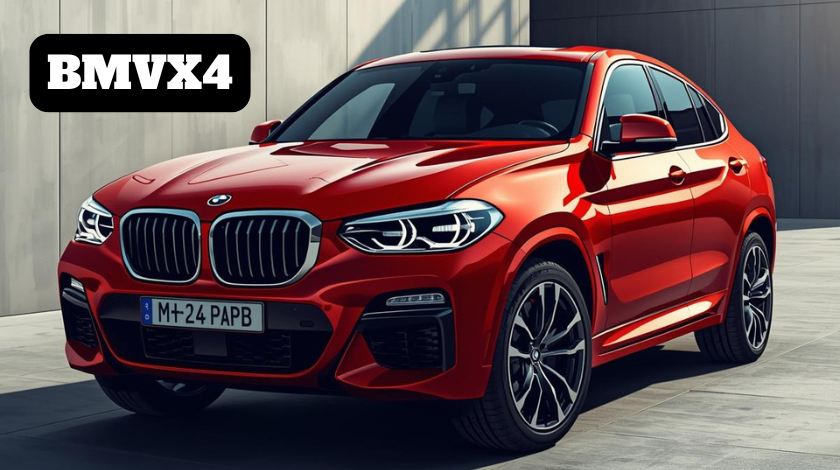
When I first laid eyes on the BMW X4 at a dealership three years ago, I remember thinking this was one of the most confusing vehicles I had ever seen. Here was an SUV that desperately wanted to be a coupe, with a roofline that swooped dramatically toward the back, as if someone had accidentally left it out in the sun and it had started to melt. I could not understand why anyone would choose this over the perfectly practical BMW X3 sitting right next to it. But then I spent a week driving one, and something strange happened. I started to get it. I started to understand why people fall for this oddly-shaped German crossover that sacrifices utility for style.
The BMW X4 is what the company calls a “Sport Activity Coupe,” which is really just marketing speak for “SUV with a chopped roof.” It has been around since 2014, and the current second-generation model was launched in 2019. For 2025, BMW has made heated front seats standard across all trim levels and added remote start to the Convenience and Premium packages. Still, it’s largely the same vehicle that’s been on sale for several years now.
That is actually important to note because while the X3 received a complete redesign for 2025 with new styling and updated engines, the X4 soldiers on with the previous generation’s architecture. This means you are technically buying older technology, though whether that matters depends on your priorities.
Let us talk about what you actually get when you buy a BMW X4. The lineup starts with the xDrive30i, which carries a starting MSRP of $55,300 according to BMW of Sterling.
This base model comes with a 2.0-liter turbocharged four-cylinder engine producing 248 horsepower and 258 lb-ft of torque. It is paired with an eight-speed automatic transmission and BMW’s xDrive all-wheel-drive system. The EPA estimates fuel economy at 21 mpg in the city and 27 mpg on the highway, though in real-world testing by Car and Driver, they actually achieved 33 mpg on the highway, which is quite impressive.
Step up to the M40i, and you are looking at $66,700 to start. This is where things get interesting: BMW swaps the four-cylinder for a 3.0-liter turbocharged inline-six that makes 382 horsepower and 365 lb-ft of torque. It also features a 48-volt mild-hybrid system to improve efficiency and power delivery. The performance difference is significant. While the base xDrive30i takes about 6.2 seconds to reach 60 mph, the M40i does it in just 4.2 seconds.
That is proper sports car territory. Here is something that surprised me, though: the fuel-economy penalty for choosing the six-cylinder is minimal. The M40i is rated at 22 mpg city and 26 mpg highway, just one mpg less than the four-cylinder in combined driving.
If you can afford the upgrade, the M40i makes a compelling case for itself.
At the top of the range sits the X4 M, starting at $79,100. This is essentially a different animal entirely, with a specially tuned version of the inline-six making 473 horsepower (or 503 with the Competition package), upgraded brakes, adaptive M suspension, and aggressive styling that lets everyone know you mean business.
It will hit 60 mph in 3.9 seconds and tops out at 177 mph. But we should be honest here: most people do not need this level of performance in a compact SUV, and the ride quality suffers compared to the lesser trims.
Driving the BMW X4 is where you start to forgive it for its practical shortcomings. This thing handles better than any SUV has a right to. BMW has always prioritized driving dynamics, and even in this compromised body style, they have managed to inject some genuine fun into the equation. The steering is precise and offers good feedback, the chassis feels balanced through corners, and the xDrive system provides excellent traction. Edmunds tested the xDrive30i and noted that while it does not sprint off the line with tremendous enthusiasm, once you are rolling, there is plenty of zip for everyday driving.
The eight-speed transmission deserves special praise because it is one of the best automatics in the business, offering smooth shifts when you want comfort and rapid-fire gear changes when you are driving aggressively.
However, I need to address the elephant in the room. That sloping roofline that makes the X4 look so distinctive from the outside creates some real problems on the inside. Rear headroom is compromised, and if you are over six feet tall, you will find yourself ducking to get into the back seat. Once seated, the rear bench is positioned low to reclaim some headroom, but this reduces thigh support and makes long journeys uncomfortable for adults.
The rear window is more of a letter slot than a proper viewing portal, which reduces visibility, though the standard backup camera and available surround-view system help mitigate this.
Cargo space takes a significant hit compared to the X3. With the rear seats up, you get just 18.5 cubic feet of storage, compared with the X3’s 31.5 cubic feet. Fold the seats down, and the X4 offers 50.5 cubic feet compared to the X3’s 67.1 cubic feet.
That is a substantial difference if you regularly haul bulky items. I learned this the hard way when I tried to fit a large suitcase and a stroller in the back of an X4 during a family trip. It was a tight squeeze that would have been effortless in the X3.
The interior itself is classic BMW, which means high-quality materials, solid construction, and a layout that prioritizes function over flash. The dashboard features a 12.3-inch digital instrument cluster and a matching 12.3-inch central touchscreen running BMW’s iDrive 7 operating system.
It is not the newest iDrive 8 or 9 found in newer BMWs, but it remains intuitive and responsive. Physical controls for the climate system and a rotary controller for the infotainment system mean you don’t have to jab at the screen while driving constantly. Apple CarPlay and Android Auto are standard and work wirelessly, which is genuinely convenient. The available Harman Kardon 16-speaker sound system delivers excellent audio quality for those who care about their music.
Safety technology includes standard features such as active blind-spot detection, lane-departure warning, and frontal collision warning with city collision mitigation.
However, I was disappointed to learn that adaptive cruise control is not available on the base xDrive30i trim; you need to step up to the M40i or add option packages to get it.
For a vehicle costing over $55,000, this feels like a significant omission, given that much cheaper cars include this feature as standard.
Now, let us address the most common question potential buyers have: Should I get the X4 or the X3? The truth is, these two vehicles share the same platform, engines, and most interior components. The X3 starts at $51,125, about $5,000 less than a comparable X4.
It offers more rear headroom, more legroom for backseat passengers, significantly more cargo space, and better outward visibility. The X3 also gets better fuel economy, with ratings of 27 mpg city and 33 mpg highway compared to the X4’s 21 city and 27 highway.
So why would anyone choose the X4? Because style matters. Because standing out from the crowd of generic crossovers has value. The X4 looks more athletic and interesting parked in your driveway or at the office. I have spoken with several X4 owners, and the consensus is clear: they knew they were sacrificing practicality, but they simply preferred the way the X4 looked. One owner told me, “I do not have kids, I rarely carry more than two passengers, and I wanted something that was not boring. The X4 fits my life perfectly.”
If you are considering the X4, you should also look at its direct competitors. The Audi Q5 Sportback offers a similar fastback SUV design, a slightly more comfortable driving experience, and a lower starting price. The Mercedes-Benz GLC Coupe provides comparable style with a more luxurious interior, though it costs about the same as the BMW. The Infiniti QX55 is a newer entry that undercuts the Germans on price but cannot match their driving dynamics or interior quality. Porsche’s Macan is arguably the sportiest option, but it starts at a significantly higher price point.
For those considering electric alternatives, the Tesla Model Y and Genesis GV60 both offer coupe-like SUV styling with zero emissions. However, they lack the traditional driving engagement that BMW enthusiasts crave, and charging infrastructure remains a concern for some buyers.
Reliability is always a concern with German luxury vehicles, and the X4 is no exception. BMW offers a four-year, 50,000-mile new vehicle limited warranty, which is standard for the segment.
Maintenance costs will be higher than those of mainstream brands, and you should budget for expensive tires, brake pads, and oil changes. That said, the turbocharged engines have proven reasonably robust, and the ZF eight-speed transmission is a known quantity that holds up well over time. Kelley Blue Book notes that the X4’s resale values typically run about average for the segment, which is neither impressive nor concerning.
After spending considerable time with the BMW X4 across different trim levels and driving conditions, I can offer this guidance. The X4 makes sense for a specific type of buyer: someone who prioritizes style and driving enjoyment over maximum practicality, who rarely needs to carry tall cargo or multiple adults in the back seat, and who values the BMW badge and driving dynamics enough to pay the premium over mainstream alternatives. If you have a small family or frequently transport bulky items, the X3 is objectively the smarter choice. But if you want a vehicle that makes you smile when you walk up to it in the parking lot and puts a grin on your face when you take the scenic route home, the X4 delivers.
I would personally recommend the M40i trim for most buyers. The six-cylinder engine transforms the vehicle’s character, making it feel genuinely special rather than merely competent. The price jump from the xDrive30i is significant, but you get meaningful performance upgrades that you will appreciate every time you accelerate onto the highway. Add the Premium package for the head-up display and heated seats (now standard for 2025), and you have a well-equipped luxury crossover that justifies its existence despite the practical compromises.
Conclusion
The BMW X4 occupies a unique niche in the automotive landscape. It is not the most practical compact luxury SUV, nor is it the cheapest. But for buyers who want the elevated seating position and all-weather capability of an SUV combined with the style and driving dynamics of a sports coupe, it offers a compelling package. The 2025 model carries over largely unchanged from previous years, meaning you get proven technology but not the latest features found in the redesigned X3. Whether this matters depends on your priorities. If style and driving enjoyment rank higher than cargo capacity and rear-seat headroom on your list, the X4 deserves a spot on your test drive list. Just go in with realistic expectations about the space limitations, and you will likely find a vehicle that brings genuine joy to your daily commute.
Frequently Asked Questions
Is the BMW X4 reliable? The BMW X4 uses proven powertrains and components that have been in service for several years. While BMW does not top reliability charts, the X4 is generally considered dependable for a luxury vehicle. Regular maintenance is essential, and you should expect higher repair costs than mainstream brands once the warranty expires.
How much does a BMW X4 cost? The 2025 BMW X4 xDrive30i starts at $55,300, the M40i begins at $66,700, and the high-performance X4 M starts at $79,100.
Real-world transaction prices often run slightly below MSRP, with Kelley Blue Book suggesting fair purchase prices that are about $2,200 below sticker price.
Should I buy the BMW X3 or X4? Choose the X3 if you prioritize practicality, cargo space, rear-seat comfort, and value. Choose the X4 if you prefer distinctive styling and are willing to sacrifice some utility for aesthetics. Both offer the same engines and driving dynamics, so the decision comes down to body style preference and lifestyle needs.
What is the fuel economy of the BMW X4? The xDrive30i achieves an EPA-estimated 21 mpg city and 27 mpg highway, while the M40i returns 22 mpg city and 26 mpg highway. Real-world highway driving can exceed EPA estimates, with some testers achieving over 30 mpg.
Does the BMW X4 have enough cargo space? With 18.5 cubic feet behind the rear seats and 50.5 cubic feet with seats folded, the X4 offers adequate space for most daily needs but significantly less than traditional SUVs. If you regularly transport large items, the X3 or another boxier SUV would better suit your needs.